
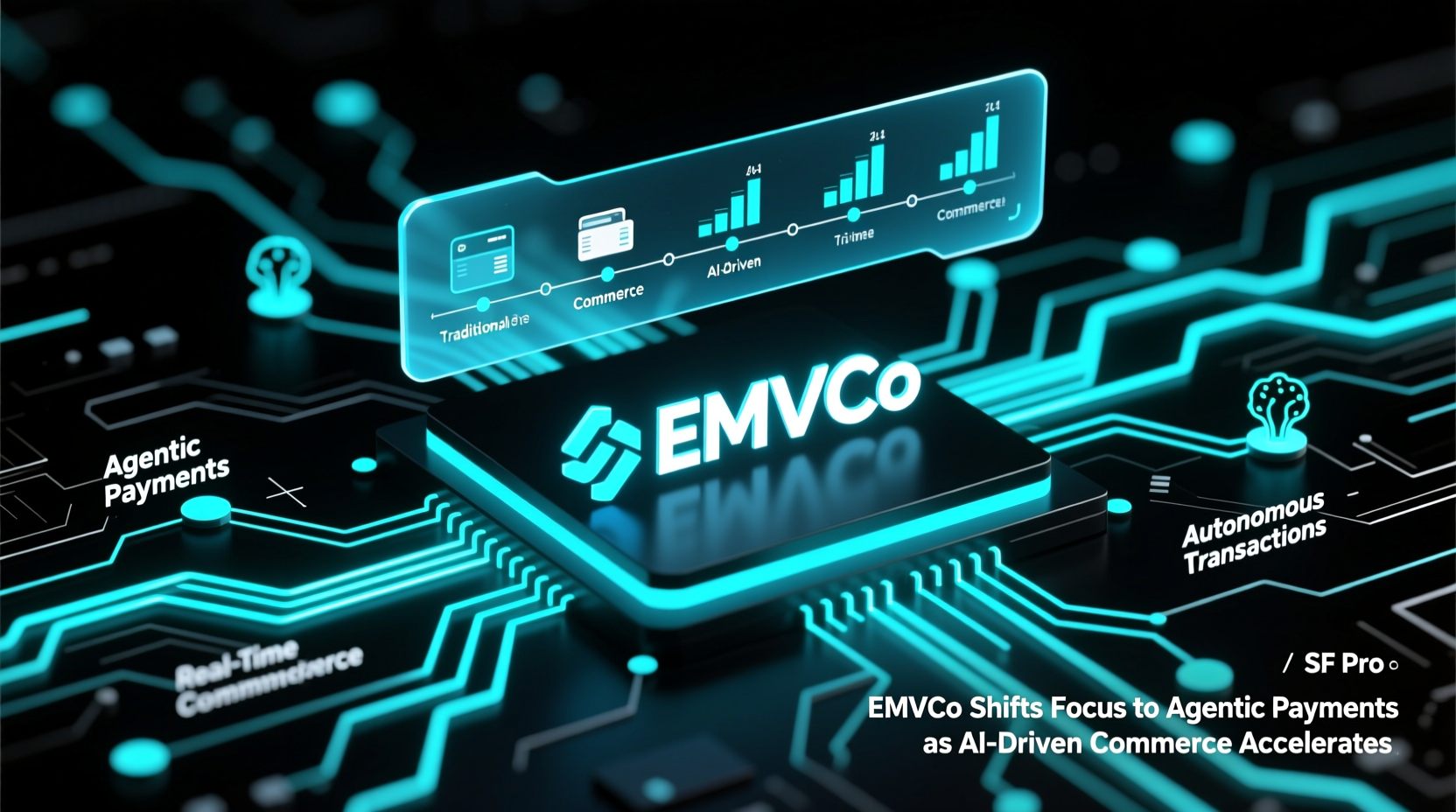
as AI-Driven Commerce Accelerates
EMVCo — the global technical body owned by major card networks — has officially begun exploring how its standards can support the rapid emergence of AI-powered agentic payments. With payment providers and technology giants gearing up for a future where autonomous AI agents initiate and complete transactions on behalf of consumers, the organisation says now is the time to build a global, interoperable foundation.
Agentic commerce represents one of the most anticipated shifts in digital payments. Under this model, AI agents make purchasing decisions, execute transactions, manage subscriptions, and even negotiate pricing without direct user input. While this unlocks automation and convenience, it also raises new questions around authentication, data access, risk controls, and transaction security.
EMVCo acknowledges these challenges, noting that agentic payments will fundamentally change how transactions are initiated and verified, requiring new rules and trust frameworks that go beyond existing card standards.
“As adoption accelerates, a globally interoperable and scalable approach may be beneficial in realising trusted agentic payments for consumers, merchants and issuers,” the organisation said.
Patrik Smets, chair of the EMVCo Executive Committee, added:
“EMVCo developed the global specifications that enable trusted card-based payments worldwide. There is now a clear opportunity to collaborate with industry participants to extend that experience and support agentic payment solutions.”
What This Means for Consumers and the Market
The move is significant. Agentic payments mark a major shift from user-led transactions to AI-driven automation. This transition could redefine consumer behaviour, reduce checkout friction, and create entirely new business models for merchants and PSPs.
However, it also introduces fresh risks:
- Consumers may lose visibility into automated spending decisions.
- Merchants and issuers must prepare for AI-initiated chargebacks, disputes, and fraud.
- Regulators will be forced to rethink consent, data privacy, and liability frameworks.
EMVCo’s early involvement suggests the industry intends to build common global rails before fragmented solutions emerge. This is likely to shape the future of recurring payments, digital wallets, IoT payments, and embedded finance — ultimately influencing how billions of transactions occur in the AI-driven economy.






Leave a Reply